Treatment
Reimbursement path
Veterinarian provides care
Direct-payment arrangement
Veterinarian provides care

Veterinary expense insurance for a dog concerns the owner’s eligible bills, the claim documents and who pays the clinic at treatment.
Use these checkpoints to frame the literal question before reading the full guide.
Veterinarian insurance for dogs usually means insurance that may reimburse the dog owner for eligible veterinary expenses. It should not be confused with insurance protecting the veterinarian’s business. Read the provider-choice clause and payment provisions together: being allowed to visit a veterinarian does not establish that the clinic will bill the insurer directly.
The sections below show how to verify the answer and what can change it.
| Step | Reimbursement path | Direct-payment arrangement |
|---|---|---|
| Treatment | Veterinarian provides care | Veterinarian provides care |
| Clinic payment | Owner normally funds the bill under clinic terms | Insurer may pay its approved share if arrangement works |
| Claim review | Owner submits required records | Eligibility still must be reviewed |
| Retained amount | Owner keeps exclusions and cost sharing | Owner still pays their share and excluded items |
ASPCA Pet Health Insurance’s published process tells owners to pay the veterinarian, submit a claim and receive eligible reimbursement. Trupanion’s dog page describes direct payment where the hospital has the required software and approves direct billing. These are different workflows; neither establishes an arrangement with the reader’s own clinic.
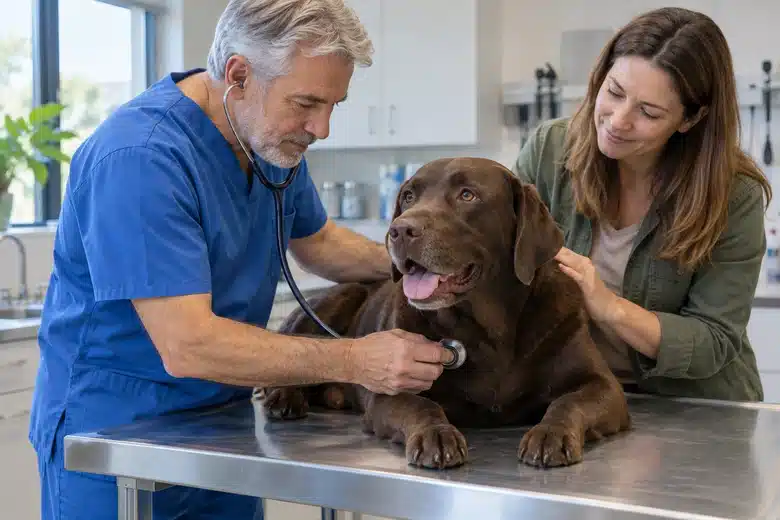
Healthy Paws’ overview permits licensed veterinarians in the US and while traveling in Canada. That source statement concerns eligible provider choice; it does not promise every invoice item is covered or that the clinic waits for reimbursement. A particular referral requirement was not established for an issued policy in this research.
Keep policy terms, deductible, reimbursement and limits beside the quote so the comparison stays consistent.
Assume an invented $1,500 bill contains $200 of excluded services and $1,300 of eligible care. In a hypothetical deductible-first design with $300 remaining deductible, 80% reimbursement and enough benefit remaining, payment is ($1,300 − $300) × 80% = $800. The owner retains $700 of the bill, plus premiums. If reimbursement follows payment, the owner may first need to fund all $1,500.
Do not use that calculation until the event itself qualifies. The same invoice can produce a different result if the illness began before coverage, a waiting rule applies or the selected annual benefit has been exhausted. A veterinarian’s medical recommendation establishes the care proposed, not the insurer’s coverage decision.
Save an itemized invoice showing each service date and charge, the clinical notes explaining why treatment occurred, previous records requested by the insurer, and proof of payment where required. If a specialist saw the dog, keep the referral and report together. When a claim decision excludes a line, compare the written reason with the exact wording rather than resubmitting an unchanged invoice without context.
No individual dog’s operative packet, referral determination or clinic direct-payment approval was obtained. This explains the workflow without promising acceptance by a particular veterinarian or insurer.
Selling a policy and providing eligible care are separate matters. Check the actual policy’s provider requirements.
Not necessarily. Excluded services, deductible, coinsurance and limits can leave substantial costs with the owner.
Keep the policy terms beside the price, then continue to rates when the comparison is clear.